Box-in-box shipping, size-pair verification, half-size handling, structured packaging for shoe boxes in transit, and same-day returns processing — fulfilled from our Los Angeles fulfillment center for DTC footwear brands, sneaker drops, performance athletic brands, luxury footwear companies, and wholesale shoe brands shipping to retail accounts.
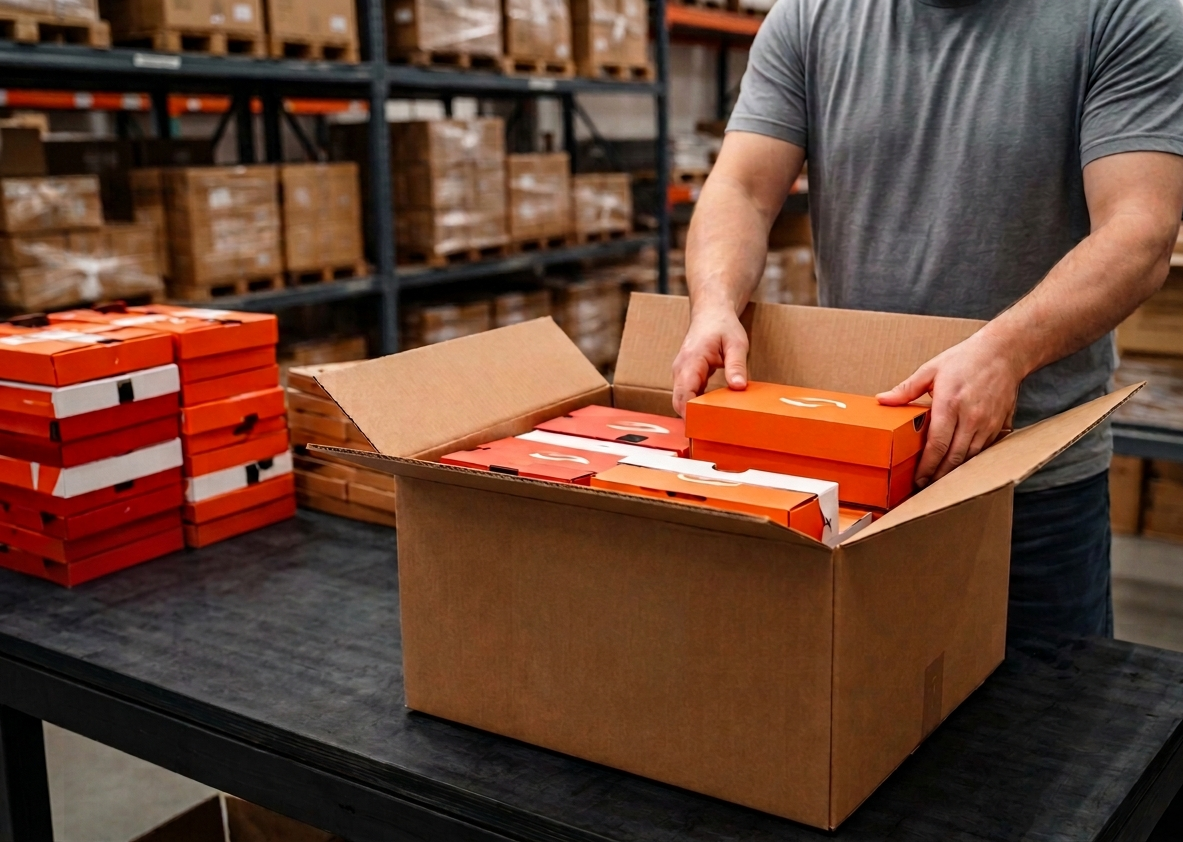

Size-pair accuracy
Transit protection
Returns processing
Bin-level tracking

Footwear inbound in original manufacturer cartons via container, LTL, or small parcel. Container drayage from the Ports of Los Angeles and Long Beach handled directly — we are 8 miles from the ports, where most overseas footwear manufacturing lands. Each case unpacked and verified: size, color, style, left-right pairing, and original packaging condition all checked before stock enters inventory.

Shoe boxes stored on shelving by SKU, size, color, and width variant — each variant assigned a dedicated bin location with unique location code. Half-sizes, wide-width, and unisex sizing variants tracked separately, not bundled with adjacent sizes. Naturally cool Los Angeles warehouse environment protects leather, suede, and adhesive-bonded footwear from heat damage and adhesive failure.

Size-specific pick from organized bins with scan-verification on every pair. Every shoe box scanned against the order line — size, color, style, and width all verified before it leaves the bin. Left and right shoe pairing verified by SKU because mis-pairs from manufacturer-level errors get caught before they ship to a customer.

Original shoe box inspected for crush damage or cosmetic flaws before pack-out. Box-in-box shipping applied per spec — the manufacturer shoe box goes inside an outer mailer or shipping carton so the shoe box itself arrives undamaged for the unboxing experience. Tissue paper, branded inserts, and unboxing elements applied per your brand standard.

Carrier-optimized routing — outer mailer for compressed shipping, structured box for premium or high-value footwear, dimensional weight optimized to keep shipping cost reasonable on bulky shoe boxes. Multi-carrier rate shopping at the order level across UPS, USPS, FedEx, and regional carriers — footwear's dimensional weight pricing makes carrier selection meaningful on every shipment.

Footwear returns received, inspected for try-on wear versus actual use (sole scuffs, crease patterns, insole compression, odor), and graded against your standards. Sellable returns repackaged in original shoe box with tissue and inserts restored to new condition, then restocked same day. Return reason codes tracked by size, width, and style to surface fit issues at the SKU level.
👟Every shoe box scanned at pick to verify size, color, width, and style match the order line. Left and right pair integrity verified at the SKU level — manufacturer mis-pairs caught before they ship to customers. Half-sizes, wide-width, and unisex variants tracked at bin level, never bundled with adjacent sizes that picker judgment might confuse.
📦The manufacturer shoe box is part of the product — a crushed shoe box damages the unboxing experience and triggers returns even when the shoes themselves are perfect. Box-in-box shipping protects the inner shoe box during transit with appropriate outer mailer or shipping carton selection based on shoe box dimensions and product value.
Tissue paper inside the shoe box, branded outer mailer, custom shoehorns or extra laces for premium brands, dust bag inclusion for luxury footwear, thank-you cards and care guides — every element of your footwear unboxing executed per your brand standard. Premium presentation drives Instagram and TikTok posts that drive more sales.
↩️Footwear returns require nuanced inspection — was the shoe worn outdoors (sole damage) or just tried on at home (no wear)? We inspect sole condition, crease patterns, insole compression, odor, and laces/eyelets to grade Grade A (sellable as new) versus Grade B (open-box) versus Grade C (worn, not sellable). 85% average resellable recovery rate.
Footwear retail prep including SKU stickers, hang tags, security tags, anti-theft devices, country-of-origin labels, and box labeling per retail account specifications. Different retailers want different prep — Foot Locker, Nordstrom, Dick's, and Costco each have their own footwear-specific requirements, and we maintain them per account.
DTC orders, Amazon FBM, Amazon FBA prep, TikTok Shop, Walmart, retail wholesale, and Faire orders all fulfilled from one shared footwear inventory pool. Real-time allocation prevents overselling between channels — critical for footwear brands where popular sizes sell out fast and limited drops require precise inventory control.
Footwear companies shipping POs to retail accounts including specialty shoe stores, athletic retailers, department stores, and boutiques who need hang tag application, routing guide compliance, EDI transactions, and the wholesale-specific labeling that footwear retail accounts require.
Footwear fulfillment is operationally distinct from standard apparel fulfillment for several reasons most brands underestimate when choosing a 3PL. First, the shoe box is part of the product — customers expect to receive their shoes inside an undamaged manufacturer shoe box, and a crushed box triggers returns even when the shoes themselves are perfect. This requires box-in-box shipping protocols that most generalist 3PLs skip because they add packaging cost.
Second, sizing complexity in footwear exceeds even apparel — half-sizes, wide-width, narrow-width, kids' sizes that overlap with women's sizes, EU/UK/US size conversions, unisex sizing on certain styles, and the higher consequence of getting size wrong because a customer can't "make a wrong size work" the way they sometimes can with a top or sweater. Every size variant needs its own dedicated bin location with scan-verified picking to prevent the size mix-ups that drive 30-40% category return rates.
Third, footwear returns require nuanced inspection — distinguishing between "tried on at home with clean indoor floors" (returnable to Grade A inventory) versus "worn outside one time" (Grade B at best, sometimes unsellable) versus "actually used" (typically not returnable per most brand policies). Most 3PLs grade conservatively, writing off recoverable Grade A returns and costing your brand thousands in unnecessary writedowns. 3PLCity trains footwear inspection staff specifically on try-on wear identification, recovering maximum Grade A inventory while honoring your return policy boundaries.
For footwear brands, the manufacturer shoe box is not packaging — it is the product. Customers post unboxing videos to TikTok and Instagram, customers expect to see the iconic shoe box (Nike's orange, Adidas's striped, Allbirds' kraft) before they see the shoes themselves, and a crushed or damaged shoe box ruins the unboxing experience regardless of how perfect the shoes are inside. Returns driven by shoe box damage are returns driven by your fulfillment partner's packaging decisions, not by product quality.
3PLCity uses box-in-box shipping on every footwear order. The manufacturer shoe box goes inside an outer mailer or shipping carton sized to the shoe box's dimensions, with appropriate void fill to prevent the inner box from sliding or crushing during transit. For premium and luxury footwear, structured outer cartons with corner protectors replace mailers. For standard parcel shipping where dimensional weight matters, we right-size the outer packaging to keep shipping cost manageable without sacrificing protection. The result: shoe boxes arrive at customers' doors in the same condition they left the factory, every time.
Most footwear is manufactured overseas — Vietnam, China, Indonesia, Italy (for luxury), Portugal, and India dominate global footwear production. Your containers arrive at the Ports of Los Angeles and Long Beach before they reach any other U.S. distribution point. Our Gardena facility sits 8 miles from the ports, which means we receive containers directly via local drayage and have your footwear inventory shelved within 24-48 hours of port release. A Midwest or East Coast warehouse adds 5-7 days of cross-country transit and $4,000-$8,000 per 40-foot container in drayage cost before your shoes can even ship to customers.
For footwear brands launching drops with tight timelines — sneaker releases, limited collaborations, seasonal collections — that 5-7 days of saved inland transit can be the difference between launching on schedule and launching late. From Los Angeles, 96% of the U.S. is reachable in 2 business days via ground, keeping delivery times competitive on every order. The naturally cool LA warehouse environment also protects leather, suede, and adhesive-bonded footwear from the heat damage and adhesive failure that hot inland warehouses can cause to certain footwear constructions.
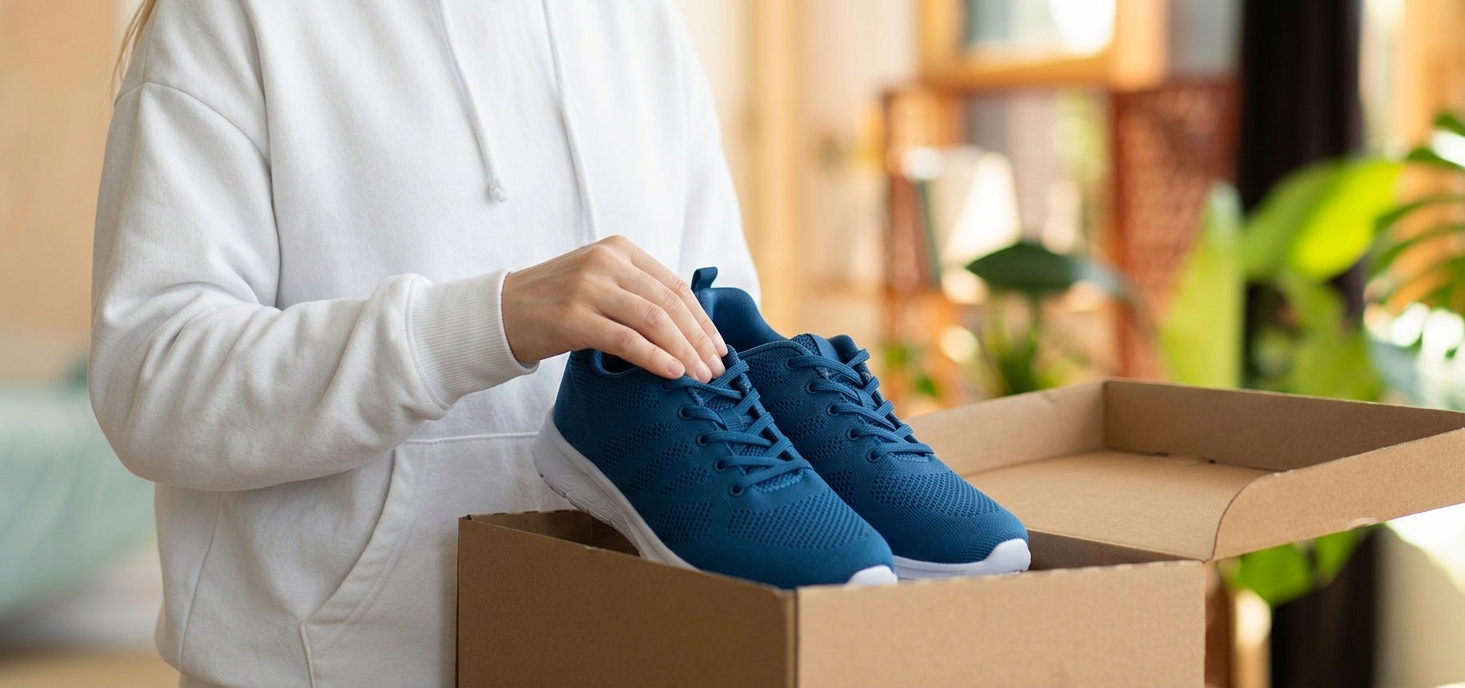
Every size, width, color, and style variant has a dedicated bin location with a unique location code. Half-sizes, wide-width, narrow-width, kids' sizes, and unisex variants are tracked separately at the bin level — never bundled with adjacent sizes that picker judgment might confuse. Pickers scan every shoe box at pick to verify size, color, width, and style against the order line. If the scan doesn't match, the pick is flagged and the shoe is rejected before it leaves the bin. This achieves 99.8% size-pair pick accuracy across millions of shoes.
Box-in-box shipping means the manufacturer shoe box goes inside an outer shipping mailer or carton during transit, protecting the inner box from the crushing, bending, and label damage that happens when shoe boxes ship as standalone parcels. The shoe box is part of the unboxing experience for footwear customers — a crushed box triggers returns even when the shoes are perfect. We use appropriately sized outer mailers for standard parcel shipping, structured cartons with corner protectors for premium footwear, and right-sized packaging to keep dimensional weight shipping costs manageable.
Footwear returns are processed same-day at our facility with category-specific inspection. We check sole condition (outdoor wear leaves scuffs and dirt; indoor try-on does not), crease patterns (worn shoes develop characteristic creasing across the toe box), insole compression (used shoes show heel and ball-of-foot impressions), odor, lace and eyelet condition, and original packaging integrity. Sellable returns are repackaged in original shoe boxes with tissue and inserts restored, then restocked within 24 hours — typically achieving 85% Grade A resellable recovery.
Yes. Sneaker drops and limited releases are surge events — orders concentrated into the first hours after release, often 50-100x normal daily volume. We pre-stage inventory at the packing line ahead of announced drops, scale pick-and-pack staff for release windows, prioritize drop orders in our fulfillment queue, and coordinate carrier pickup expansion to dispatch the volume same-day. Brands launching drops through 3PLCity ship within hours of customer purchase, not the next day, keeping customer satisfaction high and resale-flipper frustration low.
Yes. We apply hang tags, price stickers, security tags, RFID tags, SKU labels, country-of-origin labels, and case-pack labeling per retail account requirements. Different footwear retailers have different prep specs — Foot Locker, Dick's Sporting Goods, Nordstrom, Costco, REI, and specialty boutiques each require their own labeling, packaging, and shipping standards. We maintain account-specific prep instructions in our WMS and execute the correct prep based on the destination of each shipment.
DTC footwear brands on Shopify, TikTok Shop, and direct websites. Sneaker and streetwear brands running drops. Performance athletic brands across running, training, hiking, and outdoor categories. Luxury footwear with white-glove unboxing requirements. Amazon FBM and FBA prep for footwear. Wholesale footwear brands shipping to athletic retailers, department stores, and boutiques. Most footwear is manufactured overseas — Vietnam, China, Indonesia, Italy, Portugal — and arrives at the Ports of Los Angeles and Long Beach. Our facility 8 miles from the ports cuts 5-7 days of inland transit and $4,000-$8,000 per container in drayage versus inland warehousing.